Step 1: Understanding the Market and Product Demand
Biomass pellets are compact fuel sources manufactured from organic residues such as crop waste and wood by-products. These pellets are widely utilized in industries, thermal power stations, and heating systems. Due to government initiatives and stricter environmental regulations, the demand for biomass fuel is continuously growing.
Step 2: Raw Material Selection and Procurement
The quality and availability of raw materials significantly influence pellet production efficiency.
Commonly used materials include:
-
Agricultural residues like wheat straw and paddy straw
-
Wood waste and sawdust
-
Sugarcane bagasse
-
Groundnut shells and rice husk
Ensuring consistent supply, suitable moisture levels, and high calorific value is essential for sustainable production.
Step 3: Determining Plant Capacity
Before establishing the plant, it is necessary to determine production capacity based on business goals and market demand.
General production categories:
-
Small-scale production units
-
Medium-capacity industrial plants
-
Large-scale commercial production facilities
Capacity planning helps optimize machinery selection and investment allocation.
Step 4: Selecting Machinery and Production Equipment
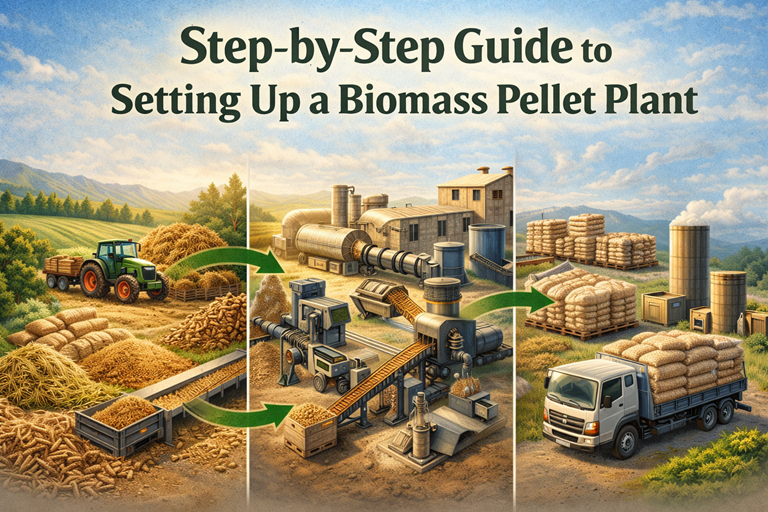
A biomass pellet plant operates through multiple stages, each requiring specialized equipment:
-
Material storage and conveying systems
-
Drying units to control moisture content
-
Grinding machines for particle size reduction
-
Pellet mills for compression and shaping
-
Cooling and screening equipment
-
Packaging and storage systems
Advanced automation technologies can further enhance productivity and reduce operational costs.
Step 5: Infrastructure and Location Planning
Proper plant layout is essential for efficient workflow and safety compliance. The facility should include storage areas, processing units, and finished goods handling sections.
Adequate space for raw material storage and machinery installation is required to maintain smooth production operations.
Step 6: Power Supply and Utility Requirements
Biomass pellet production requires a stable power source and additional utilities such as cooling systems, dust control mechanisms, and safety infrastructure. Proper utility planning ensures uninterrupted plant functioning.
Step 7: Maintaining Pellet Quality Standards
Consistent product quality plays a vital role in customer satisfaction and market credibility.
Quality control measures include monitoring pellet density, moisture levels, ash content, and combustion efficiency. Regular testing ensures compliance with industrial fuel standards.
Step 8: Financial Planning and Investment
Investment requirements vary based on plant size, automation level, and production capacity. Apart from machinery and infrastructure, operating costs include labor, electricity, raw material procurement, and maintenance expenses.
Proper financial planning improves profitability and long-term sustainability.
Step 9: Marketing and Business Development
Biomass pellets serve multiple industries, including manufacturing plants, power generation units, and export markets. Establishing strong supply agreements, digital marketing strategies, and customer partnerships helps maintain steady business growth.
Step 10: Regulatory Compliance and Environmental Responsibility
Obtaining necessary approvals and adhering to environmental regulations is crucial while establishing a pellet manufacturing unit. Biomass fuel production supports waste management and contributes significantly to reducing carbon emissions.